Tansy (Tanacetum vulgare) multiplies through three methods: sowing, clump division, and stem cuttings. Each method exploits a specific biological characteristic of this perennial from the Asteraceae family, whose network of oblique underground rhizomes serves as the main driver of propagation. Understanding this root system before multiplying the plant helps avoid two common pitfalls: obtaining too few plants or allowing tansy to take over the entire garden.
Tansy Rhizomes: The Mechanism to Master Before Any Multiplication
Common tansy does not just produce seeds. It emits underground stems that extend laterally from the main plant. Each fragment of rhizome left in the ground can regenerate into an autonomous plant, with its own roots and aerial stems.
This behavior classifies tansy among invasive perennials. For the gardener wishing to multiply the plant in a controlled manner, this means that clump division remains the most reliable and fastest method. It takes advantage of the existing root network without allowing pieces of rhizome to scatter randomly into neighboring beds.
Before dividing or taking cuttings, it is better to assess the available space in the vegetable garden or garden. If tansy must coexist with other crops, installing buried anti-rhizome barriers at a depth of 30 to 40 cm effectively limits its expansion, as detailed in Les Défricheurs’ gardening advice on managing this plant.
Clump Division in Spring: Step-by-Step Technique
Division is the most suitable multiplication method for tansy. It produces already rooted plants that can take off in a few weeks.
When to Divide Tansy
Spring, as soon as the first shoots break through the soil, offers the best conditions. The plant emerges from dormancy, and the reserves stored in the rhizomes fuel the regrowth. Dividing every two to three years both rejuvenates the mother plant and contains its spread.
Harvesting and Replanting
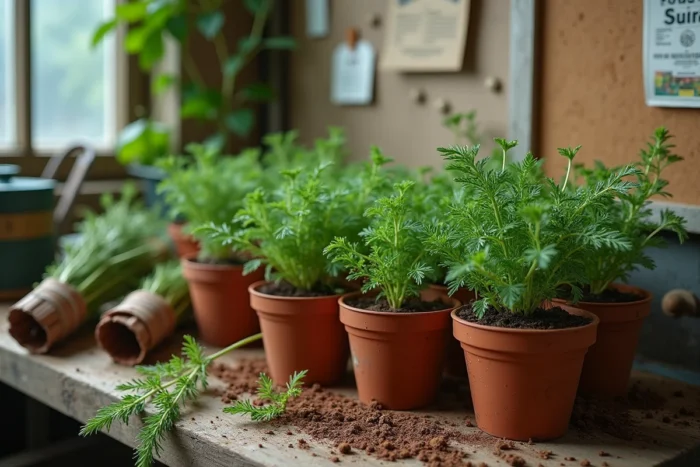
Dig up the entire clump with a fork to avoid cutting too many roots. Separate it into portions, each containing at least two or three eyes (visible buds on the rhizome) and a proper root mass.
- Replant each piece in well-drained soil, spacing the plants about forty centimeters apart to give them room
- Water generously at planting, then keep the soil moist for the first two weeks
- Remove dry or damaged stems to concentrate energy on the new shoots
Tansy tolerates sandy, limestone, or stony soils. A sunny or semi-shaded location is suitable, allowing for good adaptability in most gardens.
Tansy Sowing: A Slower Option but Useful in Large Quantities
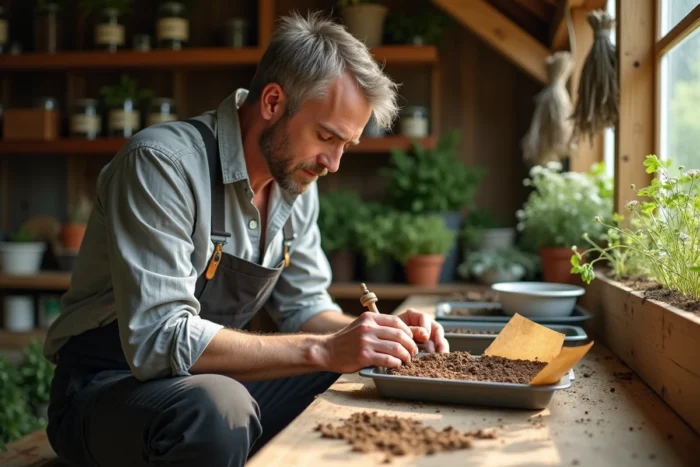
Sowing is aimed at gardeners who want to cover a large area or who do not have access to a mother plant. Tansy seeds are very fine: they are sown on the surface without covering them with soil, as they need light to germinate.
Germination Conditions
Sow under cover at the end of winter in a light substrate kept moist. Germination takes several weeks. Seedlings are fragile and grow slowly compared to a rhizome piece that already has reserves.
Transplant into the ground after the last frosts, when the plants have at least four to five true leaves. Flowering generally does not occur in the first year, unlike divisions that can bloom as early as the following summer.
Limitations of Sowing
Tansy self-seeds spontaneously in the garden, sometimes abundantly. While controlled sowing allows for choosing the starting location, it does not prevent monitoring the natural seed dispersion once the plant is in bloom. Cutting the inflorescences before seed set reduces this risk.
Tansy Stem Cutting: A Complementary Technique in Summer
Stem cutting works on tansy, although this method is less documented than division. It involves taking a segment of herbaceous (non-woody) stem in early summer when the plant is in full growth.
Cut a segment about ten centimeters below a node. Remove the lower leaves, keeping only the top two or three pairs. Plant the cutting in a mixture of sand and potting soil kept moist, in the shade.
Rooting takes several weeks of careful watering. The success rate is lower than that of division, but cuttings remain useful when the mother plant cannot be dug up, for example, in a shared garden or at a neighbor’s.
Containing Tansy After Multiplication: Barriers and Pot Culture
Multiplying tansy without planning for its containment is like planting a problem for the following seasons. Two approaches work well.
- Anti-rhizome barriers made of polypropylene, buried 30 to 40 cm deep around the planting area, block the lateral progression of underground stems
- Growing in a large pot or container allows for enjoying the repellent properties of tansy (against aphids, ants, and other vegetable garden pests) without the risk of encroachment into neighboring beds
- Regular mowing along the edge of the bed cuts the stolons attempting to escape, provided it is done every few weeks during the growing season
In pots, tansy requires a deep container to accommodate the root network and a draining substrate. Water regularly as pot soil dries out faster than in the ground. Repot or divide the contents of the container when the leaves start to yellow due to lack of space.
Methodically multiplied tansy quickly produces a reserve of useful plants for the garden, whether for preparing repellent liquid from the leaves and stems or for attracting beneficial insects with its summer yellow flowers. The real work of the gardener begins after planting: monitoring the rhizomes, not encouraging them.