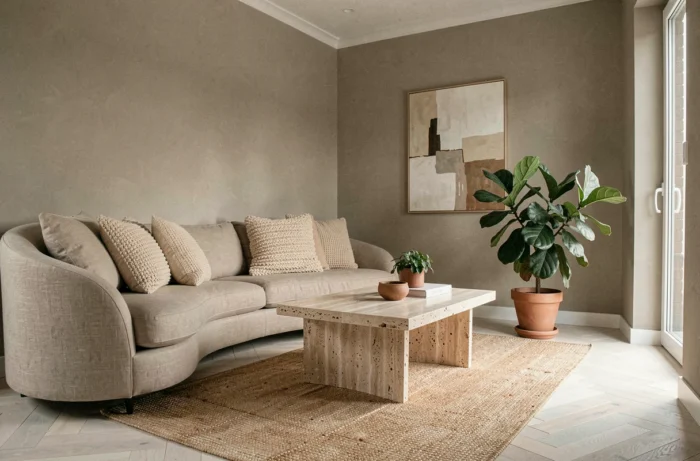
A living room that seems frozen for three years, a wall whose color is tiring without knowing why, a light wood piece of furniture that no longer matches anything: it’s often this kind of mismatch that prompts a rethink of interior decoration. This year’s decor trends are not just about a fashionable color palette. They reflect choices of materials, shapes, and uses that change the way we inhabit each room.
Earthy tones and accent colors: shades that change the atmosphere of a room
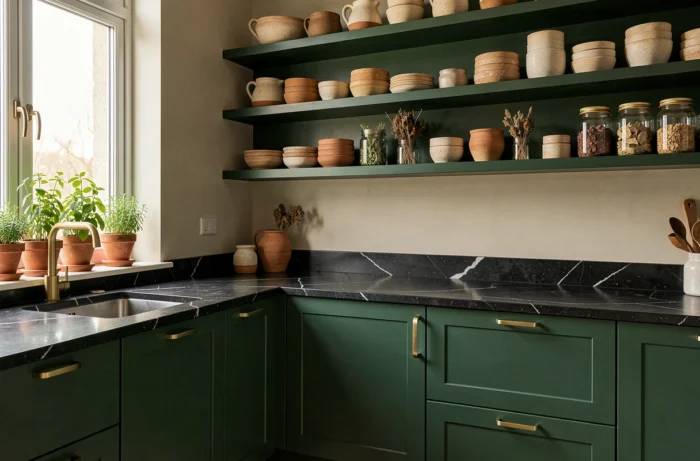
When repainting an accent wall in a living room, the choice of shade dictates everything else: furniture, textiles, lighting. Deep blue-greens, for example, structure the space without darkening it when reserved for a single wall or a statement piece of furniture.
Alongside these strong shades, earthy tones (clays, golden sands, terracottas) serve as neutral yet warm bases. They can be found on flooring, wall finishes, and household linens. The practical benefit: these colors hide everyday marks better than pure white and age without yellowing.
For those who want to go further in their combinations, you can consult decor trends on Niddou to visualize colorful combinations suitable for each type of room.
Bright accent colors should be used in small touches (a cushion, a vase, a frame) to avoid saturation. A well-placed color accent is enough to refresh a neutral living room.
Textures and natural materials: what you can touch matters as much as what you can see
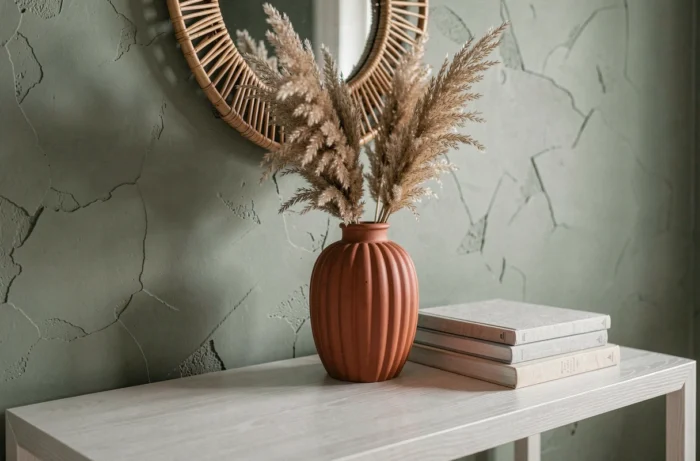
The most tangible trend this year concerns materials. We are not talking about a vague return to nature, but a choice of materials that change everyday comfort.
Dark wood and artisanal ceramics as focal points
Light wood that has dominated for several years is giving way to dark woods with a matte finish. Walnut, smoked oak, stained woods: these finishes bring visual depth, especially in a living room or dining room. Combined with artisanal ceramics (dinnerware, plant pots, decorative objects), they create a tactile contrast that smooth, uniform surfaces do not produce.
Amber glass and soft textiles for light
Amber glass is making a comeback in lighting and tableware. Its concrete advantage: it diffuses a warm, slightly filtered light that softens artificial lighting in the evening. It is combined with thick textiles (boucle wool throws, washed linen blankets) to enhance this enveloping atmosphere.
- Favor textured surfaces on large areas (lime plaster, polished concrete, natural stone) to break the smooth effect of contemporary interiors.
- Opt for household linens made from natural fibers (linen, crinkled cotton) rather than synthetics, which mark more quickly and retain heat.
- Incorporate at least one piece of artisanal ceramic in each room: surface irregularities add character without overwhelming.
Furniture with organic shapes: how it translates in a living room
Curved and organic shapes are not just about aesthetics. On a coffee table with rounded corners or a sofa with enveloping lines, organic shapes facilitate movement in small spaces. They avoid snagging corners, gain a few centimeters of passage, and visually, the room appears less rigid.
Mismatched furniture is also becoming a common practice. Pairing chairs of different styles around the same table, for example, breaks the monotony of a catalog set. Reactions vary on this point: some find the exercise difficult without falling into disorder. The rule that works best is to maintain a consistency of material or color, even if the shapes differ.
In terms of design, we are seeing a rise in grandmillennial style, which mixes vintage references (floral prints, scallops, block-print patterns) with contemporary furniture. This trend, driven by social media, is appealing because it allows for mixing eras without imposing a strict code.
Living room decoration: concrete mistakes to avoid this year
Adopting a decor trend without adapting it to your space is the most common pitfall. A few recurring situations deserve to be highlighted.
Painting four walls in a strong shade in a modestly sized living room creates a cave effect. One surface is enough to anchor the color; the other walls should remain in light or earthy tones.
Accumulating natural materials without varying textures results in a flat outcome. A wall of reconstituted stone paired with a raw wood floor and a linen sofa creates three different levels of grain, which structures the decor better than a total uniform look.
Neglecting lighting remains the mistake that neutralizes all efforts. An amber glass light fixture placed on a dark wood piece of furniture has no effect if the main source remains a cold white ceiling light. Layering light (table lamp, string lights, candle) transforms the atmosphere of a room more than changing the furniture.
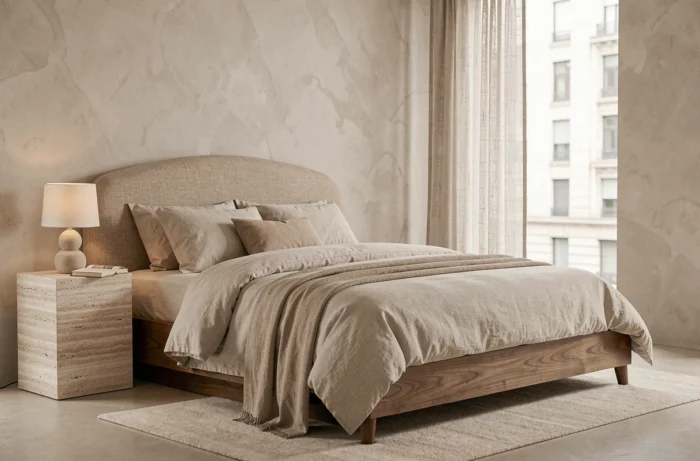
This year’s decor trends boil down to an operational principle: every choice of material, color, or shape must respond to a real use. An interior that works daily, where light falls well and where textures respond to each other, ages better than a decor copied from a mood board. The best test remains to live with a change for a few days before adding another one.