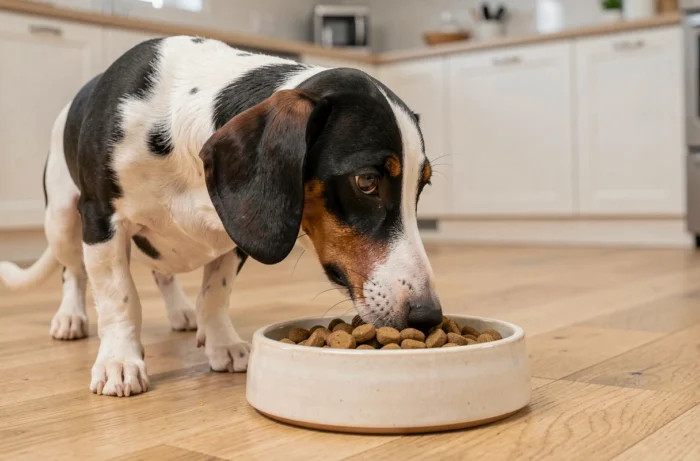
A short-haired harlequin dachshund that refuses its morning kibble, another that gulps down its bowl in ten seconds and immediately demands more: we regularly encounter these two cases. The harlequin coat (or dapple) catches the eye, but it is the morphology of the dachshund, its elongated back and short legs, that dictates the real dietary choices.
Properly feeding this small dog is primarily about protecting its spine and maintaining a stable weight throughout its life.
Merle gene and harlequin dachshund diet: what really changes
The merle gene, responsible for the harlequin coat, does not alter metabolism or digestion. A dapple dachshund has the same nutritional needs as a solid-colored dachshund of the same size. The ration should remain in line with FEDIAF recommendations for age and activity level, without adjustments related to coat color.
Where the harlequin genetics come into play is on the sensory level. Dachshunds resulting from double merle crossings have an increased risk of deafness or eye disorders. A visually or hearing-impaired dog needs a stable and predictable feeding routine: same times, same bowl location, calm environment during meals. This framework reduces stress, and a less stressed dog digests better.
For those with vision problems, small-sized kibble and easy-to-manage textures are preferred. A dachshund struggling to locate its food in the bowl can also benefit from a licking mat or an elevated bowl with high sides. By combining Attitude Canine’s nutritional advice with regular veterinary check-ups for eyes and ears, we cover both aspects of the issue.
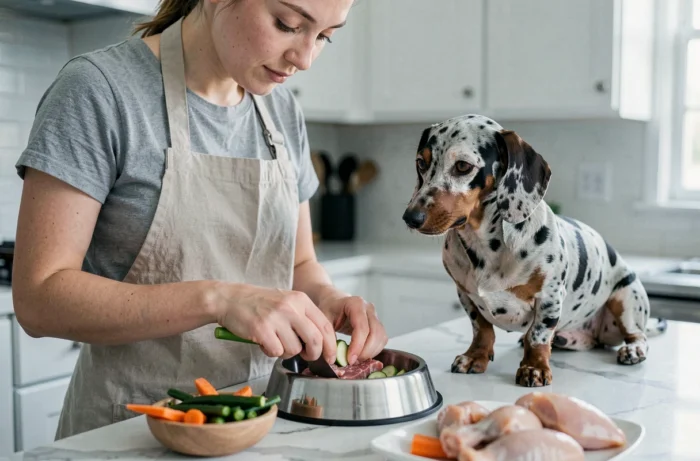
Overweight in dachshunds: the primary factor for disc herniation to watch in the bowl
Intervertebral disc disease (IVDD) remains the nightmare of dachshund owners. Overweight directly increases pressure on the spine. Every extra gram on a dog whose back is already mechanically vulnerable increases the strain on the discs.
Controlling portions from the puppy stage is the most effective preventive measure. Owners often overestimate the quantities during growth, thinking they are doing well. A dachshund puppy fed too generously develops a metabolic pattern that is difficult to correct in adulthood.
Assess body condition rather than relying on the scale
The ideal weight varies according to size (standard, miniature, or kaninchen). Instead of aiming for a fixed number, feel the dog’s ribs. They should be noticeable under a thin layer of fat, without being visible. The waist should show a clear indentation when viewed from above.
If the ribs are hard to feel, reduce the daily ration by about one-tenth and reassess after two weeks. Treats count towards the total caloric balance, a point many owners forget.
- Weigh the kibble at each meal with a kitchen scale, not by eye in the measuring cup
- Divide the ration into two meals per day for an adult, three for a puppy up to six months
- Remove uneaten leftovers after fifteen minutes to prevent free grazing
- Deduct treats and training rewards from the daily total
Proteins, fats, and joints: composing the right ration for a short-haired dachshund
The dachshund is a carnivore. Its ration must contain at least one-quarter of quality animal proteins, sourced from identified meat or fish (chicken, lamb, salmon), not vague by-products. Proteins support the muscle mass which, in the dachshund, acts as a natural corset around the spine.
Fats provide energy and contribute to the health of the short coat, which remains exposed to friction and temperature variations. We aim for a moderate level to avoid excessive caloric intake.
Glucosamine and chondroitin: joint support to integrate early
These two compounds protect the intervertebral discs and joints. Some premium kibbles include them in their formulation. If not, they can be added as supplements, after veterinary advice.
A dachshund fed with glucosamine-enriched kibble from adulthood has better long-term joint health. Feedback varies on the curative effectiveness once degradation has occurred, but for prevention, the benefits are more widely agreed upon.
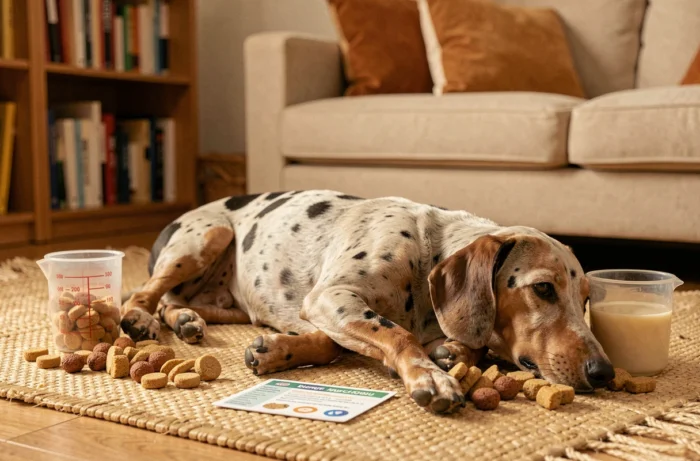
Kibble, wet food, or BARF: what feeding method for this size
The choice of feeding method mainly depends on the owner’s ability to maintain strict control over quantities.
- Quality kibble offers the best caloric control: you weigh, you serve, it’s reproducible every day
- Wet food is more palatable and hydrates more, but its caloric content per gram is more variable from one brand to another
- BARF (raw feeding) requires precise calculation of the bone/meat/offal ratio and close veterinary monitoring to avoid calcium and phosphorus imbalances
For a short-haired harlequin dachshund living in an apartment with moderate physical activity, kibble remains the simplest foundation to manage. You can occasionally add a bit of wet food or cooked meat to vary textures, provided you adjust the amount of kibble accordingly.
Prohibited foods: the non-negotiable list
Chocolate, grapes, onions, garlic in quantity, xylitol (a sweetener found in some peanut butters), alcohol. No exceptions, regardless of the dose. These foods can cause poisoning that can be fatal to dogs, and the small size of the dachshund further reduces the margin of tolerance.
The diet of a short-haired harlequin dachshund is not mysterious: identified animal proteins, controlled fat content, weighed portions, and regular monitoring of body condition. The harlequin coat does not change the contents of the bowl, but it requires attention to potential sensory impairments that alter how the dog approaches its meals. The real challenge with this breed is consistency on a daily basis.