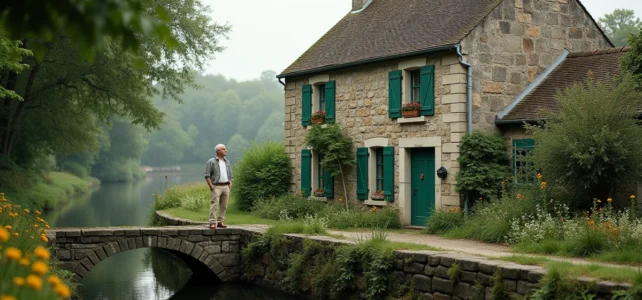
On the Ille-et-Rance canal, an old lock house has been hosting floating accommodations and a stop for passing cyclists for a few years now. The project, led by a couple of entrepreneurs, combines guest rooms on the water with a bike rental point. This type of conversion illustrates what attracts tourism project leaders to these small stone buildings lined along the Breton canals.
Lock House and Third Place: A Hybrid Model Not Offered by Competitors
One might spontaneously think of a gîte or guesthouse. However, several lock houses in Brittany now operate as inclusive places open to all, featuring cultural programming, workshops, and support for vulnerable audiences. In Morbihan, at least one association manages its lock house on this principle, combining friendliness, social connection, and tourism activities.
For an entrepreneur, this third-place formula changes the economic model. Instead of relying solely on summer visitors, one can offer workshops year-round, host artist residencies off-season, and organize local events. Breton communities view these projects favorably because they meet a dual objective: animating heritage and territorial anchoring.
Searching for a lock house for sale in Brittany quickly reveals that most of these buildings belong to the regional public domain. One does not buy on the free market: one responds to a call for projects launched by the Region, then signs a temporary occupancy agreement. This legal framework strongly guides the type of activity that can be envisioned.
Public Domain Occupancy Agreement: Concrete Constraints for a Tourism Project in Brittany
The Brittany Region regularly publishes calls for projects for its lock houses. At the end of 2024, for example, the Brittany Romantique community of municipalities launched a call concerning the houses of Gacet, La Moucherie, and La Ségerie, with an updated specifications document and a FAQ published in early 2025.
The project leader does not become the owner. They obtain a temporary occupancy agreement that sets the duration of operation, obligations for heritage enhancement, and conditions for the return of the property. Specifically, one commits to maintaining the building in good condition, respecting its architectural character, and developing an activity consistent with the animation of the canal.
This constraint filters applications. An entrepreneur looking for a classic real estate investment with future resale will not find what they are looking for. On the other hand, for someone wanting to build a tourism activity without mobilizing heavy purchase capital, the system offers a real advantage: access to land is much cheaper than a full ownership purchase.
What the Specifications Really Require
Obligations vary from one call to another, but the foundation remains the same:
- Preservation of built heritage: renovation work must respect original materials (stone, slate) and the exterior appearance of the building. One does not install composite cladding on a lock house from the Nantes to Brest canal.
- Tourist animation of the site: accommodation, light catering, bike or canoe rentals, cultural activities. The project must contribute to the life of the towpath.
- Public access: the lock house is not a closed place. Communities expect a welcome for walkers, cyclists, and boaters, even if the main activity is accommodation.
- Annual reporting: the agreement holder must report on visitor numbers, the condition of the building, and compliance with the specifications.
Bicycle Routes and Breton Canals: The Attendance Lever That Structures the Project
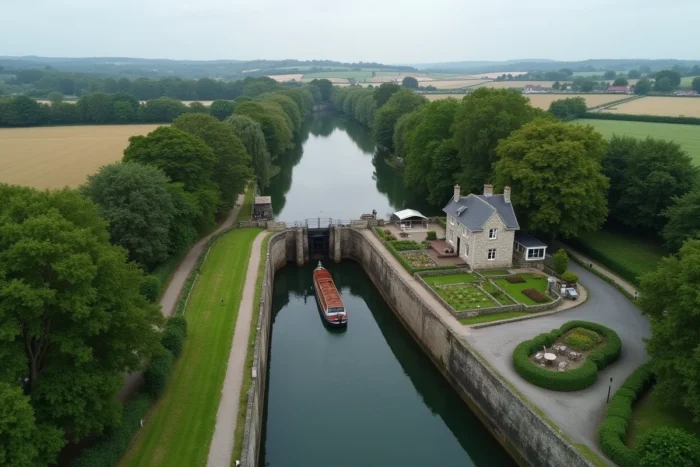
Lock houses do not operate in isolation. Their attractiveness directly depends on their integration into structured bike routes that run alongside the Breton canals. Regional tourism players position these buildings as stopover points on organized bike trips, offering gourmet breaks, accommodation, and sometimes luggage transfers.
For an entrepreneur, this connection to bike circuits changes the game in terms of visibility. One does not start from scratch to attract customers: cycle tourists follow a marked route and look for stops every thirty to fifty kilometers. A well-positioned lock house on the Ille-et-Rance canal or on the Nantes to Brest canal captures this flow without excessive marketing investment.
Combining Accommodation and Services for Cyclists
Feedback varies on this point, but the projects that seem to work best are those that stack several complementary services rather than just one. A concrete example: the lock house of La Petite Madeleine in Hédé-Bazouges, on the Ille-et-Rance canal, offers floating accommodations. Other sites combine a stopover café, bike rentals, and light catering.
The idea is not to do everything but to cover at least two sources of income to smooth out seasonality. A café-stop open from April to October and a gîte bookable year-round offer natural complementarity. Off-season weekends attract local customers out for a stroll, while summer brings back itinerant tourists.
Entrepreneur Profile and Reality of the Lock House Real Estate Market in Brittany
This type of project attracts profiles undergoing professional reconversion. The quality of life weighs as much as profitability in the decision. However, one must face the constraints: the temporary occupancy agreement does not constitute a sellable asset. One invests in an activity, not in real estate in the classical sense.
The market for lock houses in Brittany is not a traditional real estate market. There are no square meter prices to compare, no capital gains upon resale. The investment focuses on renovation work, interior design, and operating equipment. These expenses remain the responsibility of the agreement holder and can represent a significant budget depending on the condition of the building at handover.
The Breton lock heritage consists of several dozen buildings spread along the waterways. The Region continues to launch calls for projects, which means that opportunities regularly arise for entrepreneurs ready to put together a solid proposal and commit to a long-term tourism project anchored in the territory.