
Finding the right business addresses is often what separates a stagnant activity from one that takes off. The problem isn’t the lack of directories or databases: it’s their relevance. Between outdated listings, poorly qualified contacts, and generalist platforms that mix everything up, identifying reliable partners, suppliers, or clients requires a method.
B2B Prospecting and Opt-in: What Changes with the August 2026 Law
Since August 11, 2026, telemarketing to individuals is prohibited by default in France, unless there is explicit prior consent from the consumer. Law No. 2025-594 of June 30, 2025, and its implementing decree have reversed the logic: we are moving from an opt-out system (Bloctel) to a mandatory opt-in for all B2C marketing.
For companies prospecting in B2B, the situation is different. B2B is not directly affected by this telephonic opt-in obligation. It is a strategic gray area: professional address files remain usable, provided that GDPR is respected and legitimate interest is documented.
This reform encourages the creation of contact databases from qualified sources: online forms, trade shows, voluntary registrations. Mass-purchased files lose their usefulness compared to databases built on tracked consent. This is a cultural shift for commercial prospecting.
Criteria for Evaluating the Quality of a Business Address
Have you ever noticed that some directories display hundreds of results without any truly matching your needs? Volume does not equate to quality. Three criteria allow for quick sorting.
- The freshness of the data: a listing not updated for two years is likely to contain an outdated number or incorrect address. Check the last modified date when it is displayed.
- Segmentation by industry: a directory that clearly distinguishes service providers, industrial suppliers, and retail businesses saves you considerable time compared to a generalist search.
- The presence of reviews or reliability signals: visible legal mentions, a link to an active website, displayed SIRET number. These details help verify that a company actually exists before contacting them.
To identify relevant partners or providers, consulting business addresses on Web Adresses allows you to directly target listings categorized by professional category, reducing noise in your searches.

Professional Social Networks and Online Visibility Strategy
Social networks are not just for publishing content. They also function as living directories. On a professional platform, each company profile contains information updated by its owner: sector, location, workforce, commercial offer.
Cross-referencing multiple sources yields more reliable results than a single directory. Take a name found in a professional directory, check their recent activity on a social network, and then consult their website. This cross-checking takes a few minutes and avoids unpleasant surprises.
Online visibility works both ways. If you are looking for business addresses, other companies are looking for you too. A complete professional profile, with a clear description of your activity and up-to-date contact information, increases your chances of being found by qualified prospects.
What Your Profile Must Contain at a Minimum
An effective professional profile includes the company name, specific sector, geographical area of operation, and a direct contact method. Adding a two or three-sentence description of your main offer is enough to filter out irrelevant inquiries.
An active website remains the most consulted trust signal before making contact. The majority of professional buyers check for the existence of a website before calling or sending a message.
Trade Shows and Networking Events: Qualifying Contacts On-site
Trade shows remain one of the few places where you can evaluate a contact in just a few minutes. Direct contact allows you to ask specific questions about timelines, production capabilities, or commercial conditions, information that is rarely available in a directory.
A common mistake is to collect as many business cards as possible without sorting them. Qualifying a contact on-site is worth more than ten listings obtained without context. Immediately note on the card or in your phone the topic discussed and the identified need. Without this note, the follow-up becomes generic and ineffective.
Business clubs and coworking spaces offer a more regular setting. Participating in a professional breakfast or after-work event helps build a relationship before discussing business. The conversion rate of a contact met multiple times is significantly higher than that of cold outreach.
Building a Usable Business Address File for the Long Term
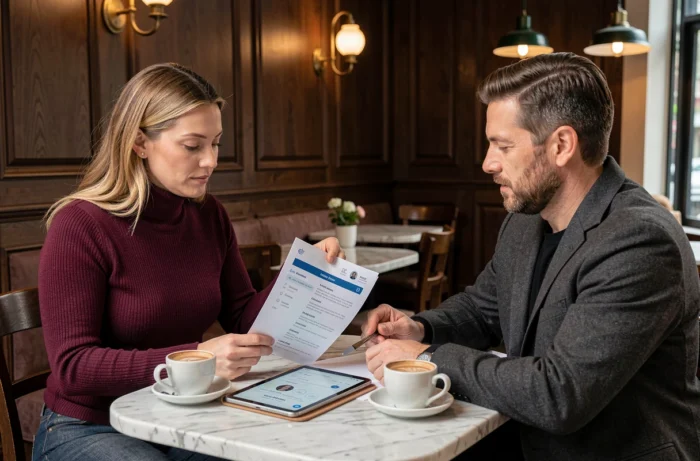
Finding addresses is pointless if they end up in a spreadsheet that is never reopened. A useful file relies on three simple habits.
- Update contact information after each interaction. An email that bounces or a disconnected number indicates an outdated listing to be deleted or corrected.
- Segment by type of relationship: potential client, supplier, partner, referrer. This classification allows you to tailor the message when following up.
- Plan for regular follow-ups, even without an immediate need. A quarterly message to check in maintains the connection without being intrusive.
A file of 50 qualified contacts produces more results than a database of 500 unfiltered addresses. The quality of follow-up determines the profitability of prospecting, not the initial volume.
With the opt-in requirement in B2C and the strengthening of GDPR, documenting the origin of each contact becomes a legal as well as a commercial necessity. Always note where and when you obtained the address, and on what legal basis you are keeping it. This reflex protects your business and enhances the value of your file with your sales teams.