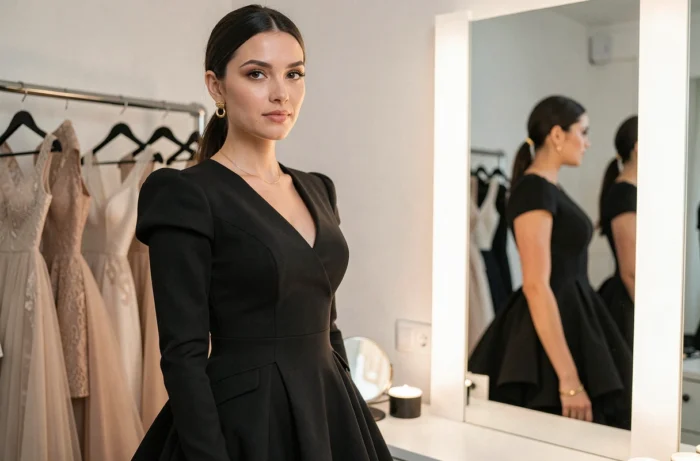
A model walking for Dior does not earn the same amount as a model posing for an advertising campaign for the house. Compensation depends on the type of service, the distribution medium, and especially the image rights granted. Understanding these mechanisms helps to untangle the fantasies from the realities of the profession.
Employee status of models in France: what the Labor Code imposes on Dior
You might imagine that a model works as an independent contractor, billing their services to the brand. In France, this is not the case. The Labor Code presumes an employment contract as soon as a person engages in modeling for compensation, even for a single day.
In practice, a model hired by Dior for a show or a shoot is an employee. The agency representing them bills the fashion house, issues the payslip, withholds social contributions, and applies the applicable collective agreement. This legal framework applies to both beginner models and well-known faces in haute couture campaigns.
This distinction has a direct impact on what the model actually receives. The amount billed by the agency to Dior does not correspond to the net salary paid to the model. Between social charges, the agency’s commission, and any deductions, the difference can be significant. Discovering the salary of a Dior model for the first time often surprises due to this gap between the announced gross rate and the amount actually received.
Presence fee and image rights: two distinct lines of compensation
The compensation for a Dior model is divided into two parts that must be clearly separated to understand the amounts at stake.

The presence fee
This covers the physical working time: casting, fitting, runway show, or photo shoot. This fee compensates the model for their presence at the service location. For a haute couture show in Paris, this time includes rehearsals, adjustments, and walking on the runway.
The image exploitation rights
This is the second line, and often the most valuable. When Dior uses photos or videos of a model for an advertising campaign, this exploitation is subject to separate compensation. Several criteria determine the amount:
- The distribution media (billboards, press, social media, website) – a global print campaign is not valued the same as an Instagram post limited to France
- The territory covered by the distribution (France only, Europe, worldwide)
- The duration of use of the visuals (a few weeks, several months, a year or more)
- The potential exclusivity, which prevents the model from working for competing brands for a defined period
A global campaign with exclusivity earns much more than a one-off runway show. It is this component that creates the most spectacular pay disparities among models.
Exclusivity and Dior contracts: the mechanism that increases amounts
Why do some models associated with Dior seem to earn considerable sums while others remain at modest levels? The answer largely lies in the exclusivity clauses.
When Dior signs an exclusivity contract with a model to embody a perfume or a makeup line, the brand also purchases the right to prevent that model from working for competitors. This loss of earnings is negotiable. The longer the exclusivity period and the broader the scope (no campaigns for another LVMH group house or a direct competitor), the higher the financial compensation.
A model who walks just once during Paris Fashion Week for Dior receives a presence fee that is incomparable to that of an ambassadorial face bound by a multi-year contract. Both hold the title of “Dior model,” but their financial realities have nothing in common.

Actual compensation for a runway model in Paris: beyond the myth
Haute couture and ready-to-wear shows in Paris attract media attention. However, the fee for a show is often modest compared to advertising contracts. For a model who is not a celebrity, a walk on a Parisian runway is negotiated at a rate much lower than what the public imagines.
The real interest of a Dior show, for a model at the beginning of their career, is not financial. It is visibility. Being selected by the house’s artistic director opens doors to other brands and agencies. The fee for the show itself does not allow them to live comfortably on its own.
Models who earn high incomes from their collaboration with Dior generally combine several sources:
- An ambassador contract with image rights negotiated across multiple media and territories
- Appearances at seasonal shows, compensated separately
- Occasional services for private events or targeted digital campaigns
It is the accumulation of these different services that builds a substantial annual income, not a single fee line.
What modeling agencies take from Dior contracts
The agency plays a central role in negotiating and managing the administrative aspects of the contract. It does not work for free. The agency’s commission reduces the net amount received by the model, sometimes significantly.
In practice, the agency bills Dior a total amount. It then pays the model their salary after deducting its commission and social charges. The model generally does not have access to the rate billed to the brand, which makes direct comparisons between models from different houses difficult.
Parisian agencies specializing in high-end fashion also negotiate exclusivity conditions, distribution territories, and usage durations. A good agent can significantly influence a model’s final income on the same type of contract.
The compensation of a Dior model is never just a single figure. It depends on the type of service, the extent of the rights granted, the duration of exclusivity, and the share taken by the agency. Two models wearing the same dress on the same runway can receive very different amounts depending on their contract. It is this contractual mechanism, much more than the prestige of the brand, that determines what a model actually earns.