Leisure time is defined as the remaining time slot once work, commuting, and domestic obligations are subtracted. In France, this time represents a significant part of the week, and the way it is spent has significantly evolved in recent years. Regular sports practice is on the rise, manual activities are making a comeback, and outdoor leisure is gaining ground over screens.
Accessible sports activities: the underlying trend in France
According to the National Barometer of Sports Practices 2025 from INJEP, 61% of people aged 15 and older engage in a sports activity at least once a week. This figure has increased by 7 points compared to 2018 and by 2 points compared to 2023. The gap between men and women has nearly closed in 2025.
The disciplines that are growing the most share a common point: they require neither club membership nor expensive equipment. Walking, running, cycling, and trail running dominate this movement.
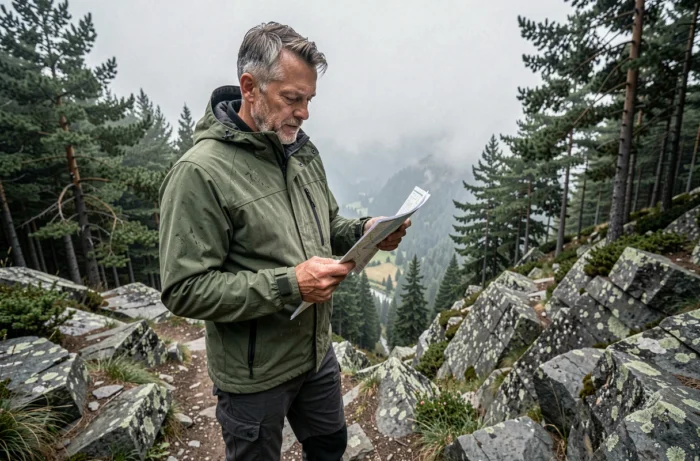
Trail running deserves special mention. This organized nature sport has seen marked growth since 2024, with a multiplication of local events accessible to beginners. The customization of formats (with friends, with music, in urban areas or in the mountains) partly explains this enthusiasm.
To explore other options and find an activity that suits your desires, the leisure activities offered on Partagez cover a wide range of disciplines, from sports to DIY to cultural outings.
Creative hobbies and manual workshops: an expanding playground
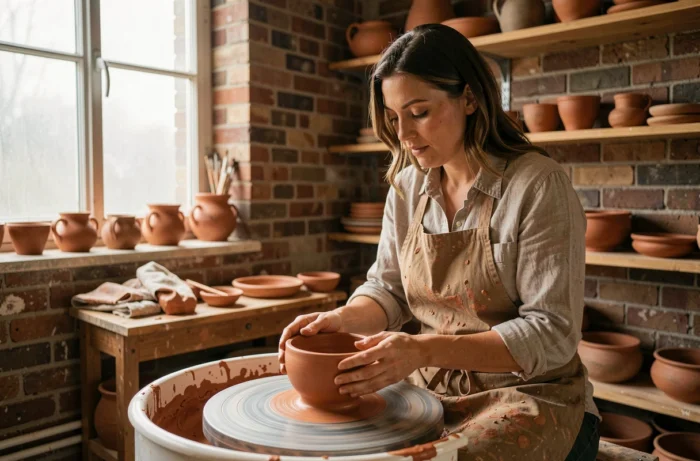
Manual activities are no longer limited to knitting or painting on canvas. Creative workshops have diversified in the fall of 2026: pottery, bookbinding, natural dyeing, introductory woodworking. This renewal is part of a search for active hobbies that produce a tangible result.
Three criteria help choose a suitable creative workshop:
- The required level: some workshops welcome beginners without prerequisites, while others assume a basic mastery (sewing, technical drawing)
- The time format: a single two-hour session is suitable for testing, but a cycle of four to six sessions allows for real progress
- The cost of materials: pottery or woodworking involve supplies provided on-site, while embroidery or watercolor require a small personal investment
Cooking remains the most practiced creative activity at home. Testing new recipes, recreating dishes discovered while traveling, or mastering a technique (fermentation, pastry) transforms a daily task into a true hobby.
Cultural leisure: theater, reading, and outings to rediscover
Live performances remain underrepresented in online lists of leisure activities, even though they are an accessible option in most French cities. Theater attracts a broader audience than one might assume, and reduced prices (last minute, youth subscriptions, cultural passes) make outings affordable.
Reading, often cited as an obvious pastime, benefits from being structured. Joining a book club, even online, imposes a regular rhythm and opens discussions on titles one might not have chosen alone.
Local heritage visits represent another underutilized opportunity. Many municipalities organize free or low-cost guided tours, including outside Heritage Days.
Screen time and digital leisure: finding the right balance
Digital leisure occupies a considerable place in free time. Video games, social networks, streaming: high screen time is associated with a negative impact on well-being, according to data reported by Passeport Santé in 2026. The question of balance thus arises concretely.
Replacing an hour of passive scrolling with an active digital activity changes the game. Learning photo editing, taking an online course (language, musical instrument, programming), or documenting outings through photography transforms the screen into a learning tool.
The distinguishing criterion is simple: an active digital hobby produces something, a passive hobby consumes content. Keeping a photo journal of hikes, editing a short travel video, or writing book reviews fall into the first category.
Leisure equipment rental: an alternative to purchase
Summer 2026 confirmed a trend already visible: the French are renting more leisure equipment, but especially in different ways. Data from the Lokki Observatory shows that rentals now cover various categories, beyond just bikes or kayaks.
This approach offers a direct advantage for testing an activity without investing. Renting a stand-up paddleboard, a sewing machine, or a camping kit allows one to verify real interest before any purchase.
- Paddleboarding and water activities remain the most popular rentals during the summer season
- Hiking equipment (technical backpack, poles, ultralight tent) is increasingly rented off-season
- Creative equipment (sewing machines, 3D printers, workshop tools) appears in rental catalogs between individuals
Access to specialized equipment without storage or maintenance constraints removes a common barrier to discovering new hobbies. Renting before buying prevents closets from being filled with equipment used twice.
Choosing a leisure activity benefits from being treated as a thoughtful decision rather than a reflex. Testing a discipline over a few sessions, alternating between physical effort and manual practice, limiting passive screen time: these adjustments are often enough to transform idle hours into truly satisfying moments.